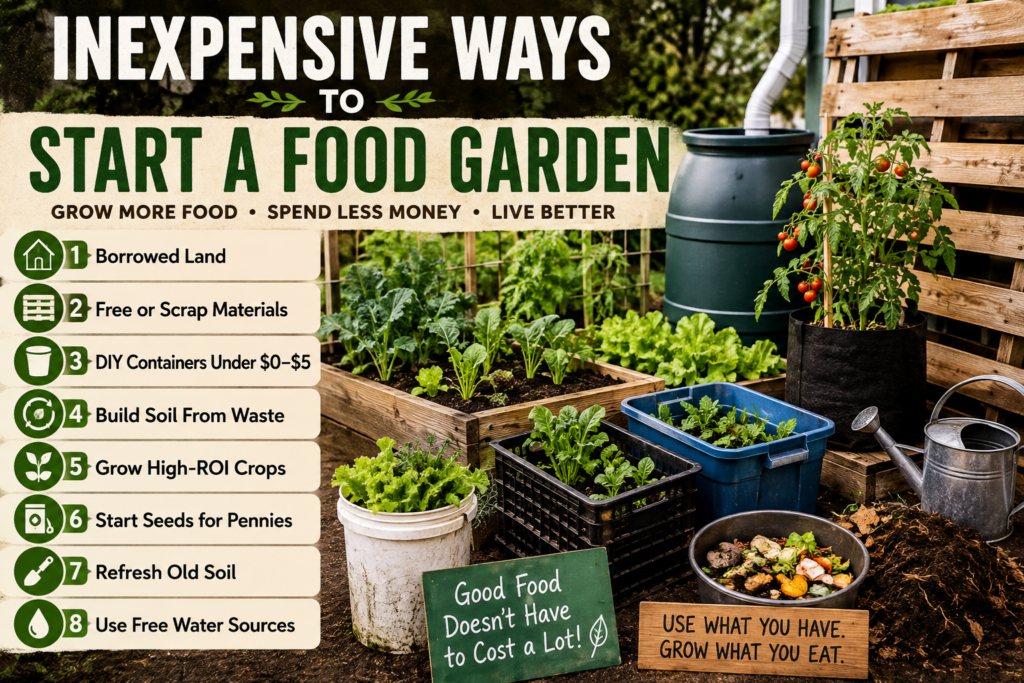
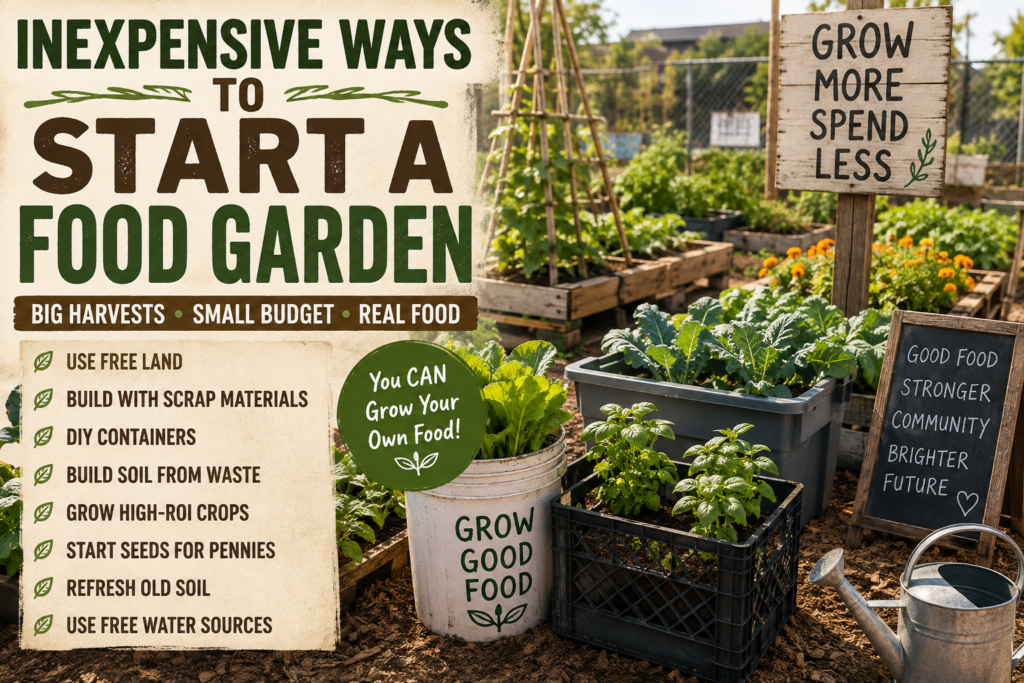
The cheapest way for unhoused or low‑income growers to start is to use free land access, scrap materials, homemade soil, and high‑yield crops like greens, beans, cucumbers, and tomatoes. Many communities, churches, and neighbors will share space, water, or tools if asked directly.
1. Choose a small, safe growing spot
- Ask locally:
- Churches, food pantries, recovery ministries, shelters, VFW/Elks, libraries often have unused sunny corners.
- What to look for:
- 6+ hours of sun, not a flood zone, easy to reach on foot or bus.
- Keep it simple:
- Aim for one small bed (3×6 ft) or 4–6 containers to start.
2. Gather free or cheap materials
- For beds:
- Cardboard (behind stores), pallets or scrap wood, fallen branches for edging.
- For containers:
- 5‑gallon buckets from restaurants, cat‑litter buckets, storage totes, milk crates lined with cardboard.
- For soil:
- Bagged leaves, grass clippings, coffee grounds, old potting soil, free compost if your county offers it.
3. Build a “lasagna” bed (no digging)
On bare ground:
- Lay cardboard over grass/weeds (overlap edges).
- Add a layer of brown material: dry leaves, shredded paper, cardboard bits.
- Add a layer of green material: grass clippings, kitchen scraps (no meat/oil), coffee grounds.
- Top with 3–4 inches of soil/compost—even mixed old potting soil is fine.
- Water well and let it settle a few days if possible.
This turns trash into soil and works great in Central Florida’s sandy ground.
4. Fill containers on the cheap
- Basic mix:
- ½ old soil or native sand
- ¼ compost (homemade or free)
- ¼ leaves/grass chopped up
- Punch drainage holes if needed; set containers where they won’t be kicked or moved.
5. Plant high‑yield, heat‑tolerant crops
For Central Florida, focus on fast, forgiving plants:
- Greens: leaf lettuce, collards, kale, mustard greens.
- Beans: pole beans (climb a fence or stick), bush beans in containers.
- Cucumbers: train up a fence or pallet.
- Cherry tomatoes: do well in buckets.
- Herbs: basil, parsley, cilantro in small containers.
If money is tight:
- Buy one or two seed packets, or use dry beans from the store and green onions that can regrow from kitchen scraps.
6. Water wisely with limited access
- Ask for hose access where you’re allowed to garden.
- Use saved jugs or buckets to carry water if needed.
- Water early morning or late afternoon to reduce evaporation.
- Aim for deep watering 2–3 times a week, not tiny daily sprinkles.
7. Simple care routine (15–20 minutes, 3–4 days a week)
- Check leaves: remove yellow or chewed ones.
- Pull obvious weeds before they get big.
- Add mulch: leaves or grass on top of soil to keep moisture.
- Harvest often:
- Pick greens from the outside of the plant.
- Harvest beans and cucumbers when small and tender.
8. Share, trade, and grow community
- Offer a small share of produce to the landowner or ministry.
- Trade extra greens or herbs for:
- More buckets
- Tools
- Seeds or cuttings
- Invite others in similar situations to help—shared work means shared food and more safety.
9. Save seeds and keep it going
- Let one or two plants (like lettuce or basil) go to seed.
- Dry and save seeds in a labeled envelope or jar.
- Replant when the season is right—this keeps the garden going with almost no cost.