What ideas are out there for unhoused or low income people who might hace access to a little land for growing. What inexpensive ways can they start a food garden?
You can start a productive, low‑cost food garden even with very limited money, tools, or land. The core idea is simple: use what’s free, grow what produces heavily, and build soil from waste. Below is a clear, practical guide based on proven low‑budget gardening methods, with citations from recent sources.
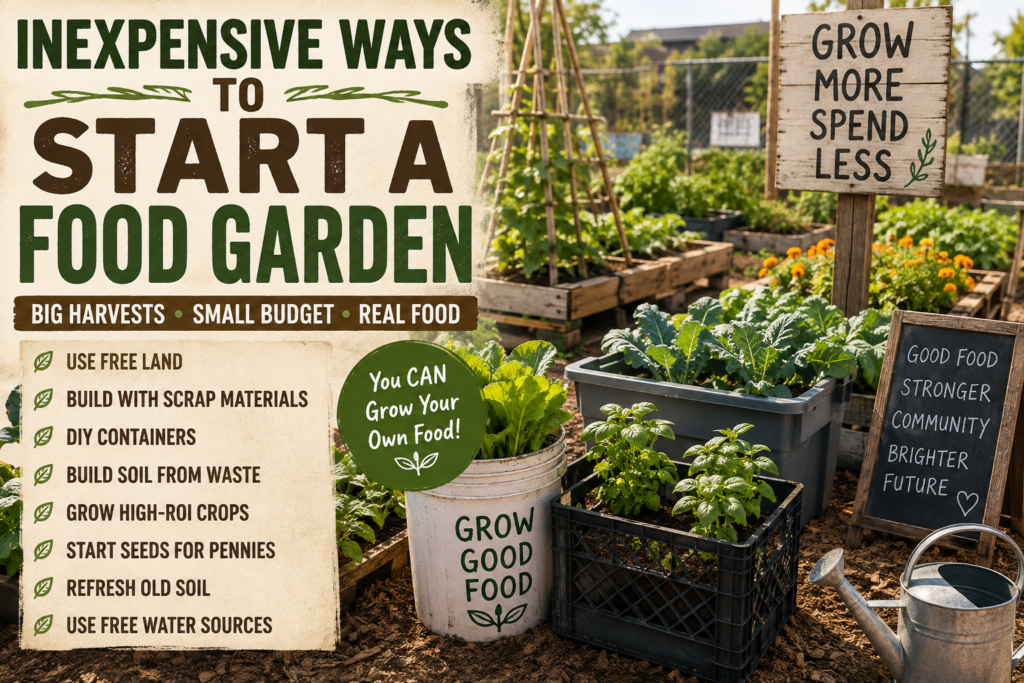
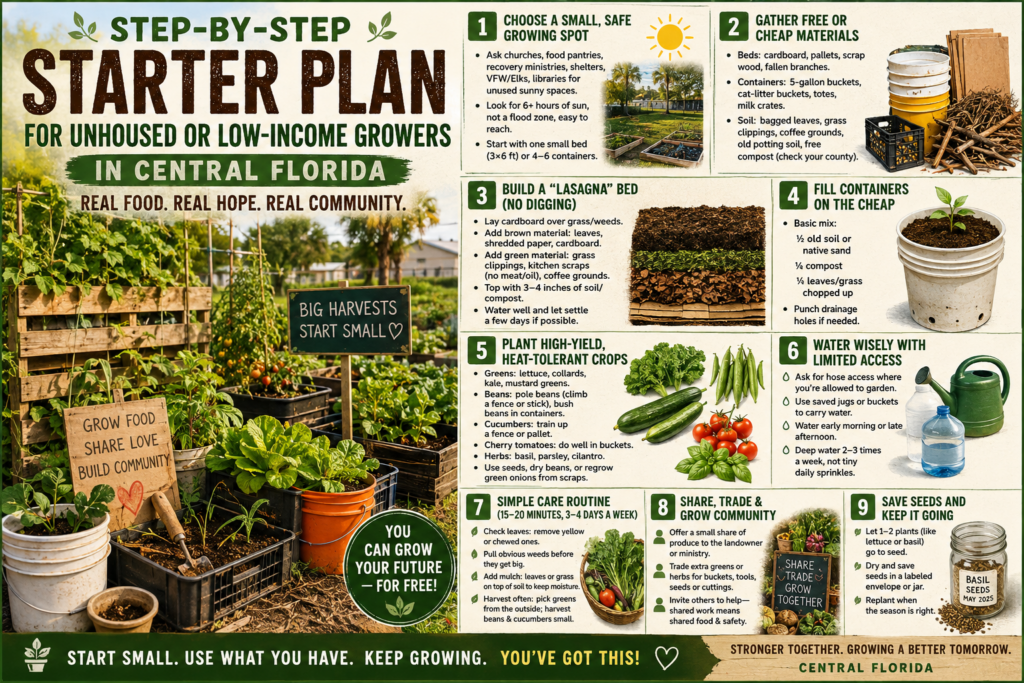
1. Borrowed Land
Many places will allow small garden plots at no cost:
- Churches, schools, clinics, libraries, and apartment complexes often have unused sunny corners.
- Offer simple perks: keeping the area tidy, sharing a little produce, or helping with litter pickup.
- A written “okay” (even an email) is enough permission.
2. Free or Scrap Materials
You can build beds and containers from:
- Pallets (look for HT heat‑treated stamps)
- Construction offcuts
- Buckets, totes, or old storage bins
- Discarded wire or branches for fencing
3. DIY Containers Under $0–$5
Great for people with very small land access:
- 5‑gallon buckets (often free from restaurants)
- Milk crates lined with cardboard
- Recycled plastic tubs
- Fabric grow bags made from old canvas or jeans
4. Build Soil From Waste
Soil is the highest cost—but you can get it free:
- Municipal leaf mold or free compost programs
- Tree‑crew wood chips
- Coffee grounds from cafés
- Kitchen scraps turned into compost or worm bins
You can also use sheet‑mulching (lasagna gardening): layer cardboard, leaves, grass clippings, and compost to create a bed without digging. This method is extremely cheap and works even on poor soil.
5. Grow High‑ROI Crops
Some crops produce over and over, giving the most food for the least money:
- Leaf lettuce
- Spinach
- Kale
- Pole beans
- Cucumbers
- Cherry tomatoes
- Basil, parsley, cilantro
These crops keep producing for weeks or months, making them ideal for low‑income growers.
6. Start Seeds for Pennies
- Use leftover seed packets, seed swaps, or grocery‑store dry beans.
- Start greens first—they sprout fast and give early wins.
7. Refresh Old Soil Instead of Buying New
If using containers:
- Remove old roots
- Add 25–30% fresh compost
- Mix in a handful of slow‑release fertilizer
- Aerate well. This costs about 25% of buying new soil.
8. Use Free Water Sources
- Rain‑barrel catchment from gutters
- Condensation buckets
- Ask for hose access from the landowner