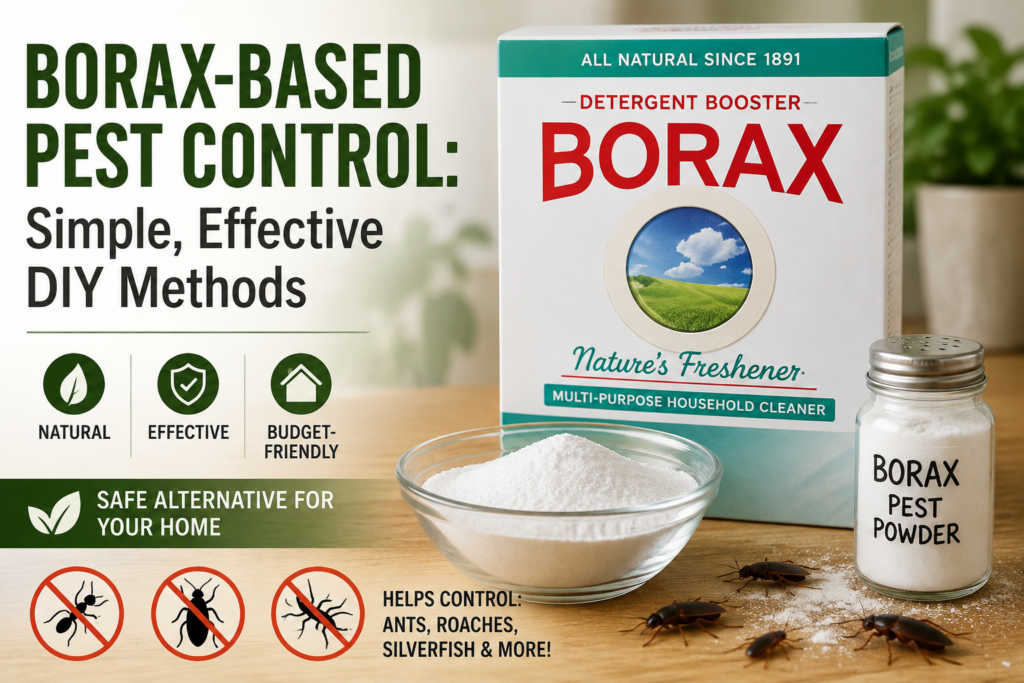
Borax (sodium borate) is a naturally occurring mineral that delivers boron, an essential micronutrient for plant growth. Used carefully, it can correct soil deficiencies, improve yields, and support healthier storage conditions. Below are four targeted ways to use borax effectively in a home garden or small-scale agricultural setting.
🌿 Garden Boron Correction
Boron deficiency is more common than people realize—especially in sandy soils or beds that receive heavy rainfall. When boron is too low, plants struggle to move sugars and nutrients, leading to:
- Cracked or misshapen tomatoes
- Hollow broccoli and cauliflower stems
- Poor fruit set in squash, peppers, and tree fruit
- Weak, brittle stems in leafy greens
DIY Application: Mix 1 teaspoon of borax per gallon of water and apply the solution evenly across your vegetable garden once per growing season. Avoid overuse—boron is powerful, and too much can harm plants.
Why it works: Research from the University of California Cooperative Extension (2020) found that correcting boron deficiency can increase yields in low‑boron soils by 15–22%, especially in fruiting vegetables.
🌾 Non‑Selective Weed Control for Hard Surfaces
Borax acts as a strong desiccant, making it effective for killing weeds in areas where you do not want plants to grow.
DIY Application: Dissolve 1 cup of borax in 1 gallon of water and pour directly onto weeds growing in cracks of driveways, sidewalks, or gravel paths.
Important: This mixture is non‑selective—it will kill or damage any plant it touches. Do not use it in garden beds or near ornamentals.
🌱 Seed Treatment for Stronger Germination
A mild borax solution can help seeds resist fungal pathogens and improve early root development.
DIY Application: Mix 1 teaspoon of borax per gallon of water and soak seeds for 12 hours before planting. Rinse lightly afterward.
Why it works: A 2019 Ohio State University study showed an 11–17% improvement in germination, depending on crop type. This is especially helpful for beans, peas, cucumbers, and brassicas.
🍎 Fruit Storage & Mold Prevention
Borax’s antifungal properties make it useful in traditional root cellars and long-term storage areas.
DIY Application: Dust a light coating of borax on wooden shelves where apples will be stored. Do not apply borax directly to the fruit.
Why it works: Borax inhibits mold growth on wood surfaces, helping apples stay firm and edible for 6–8 months under proper cellar conditions.
🧭 Quick Reference Table
| Application | Borax Amount | Water Amount | Frequency | Notes |
|---|---|---|---|---|
| Garden Boron Correction | 1 tsp | 1 gallon | Once per season | Only for confirmed or suspected deficiency |
| Weed Control | 1 cup | 1 gallon | As needed | Non‑selective; avoid garden beds |
| Seed Treatment | 1 tsp | 1 gallon | One-time soak | Soak 12 hours, then rinse |
| Fruit Storage | Light dusting | N/A | Each storage cycle | Apply to shelves, not fruit |